
TABLE OF CONTENTS
- Overview
- Prerequisites
- Use Case
- Step 1: Open the Customer Record
- Step 2: Start Impersonation
- Step 3: Browse the Customer's Storefront Catalog
- Step 4: Add Products to the Cart
- Step 5: Open the Cart and Move to Checkout
- Step 6: Review or Update Addresses
- Step 7: Select the Shipping Method
- Step 8: Select the Payment Method
- Step 9: Apply Discounts and Tax Settings
- Step 10: Review the Order Summary
- Step 11: Place the Order
- Additional Use Case
- Checkout Address Behavior by Customer Role
- Key Benefits of Creating Orders Through Impersonation
- Best Practices
- Summary
Overview
Administrators can create orders on behalf of customers by using the Impersonation feature in the Admin Console. This process begins from the customer record and redirects the administrator to the Storefront as that customer, allowing the order to be completed through the same shopping and checkout flow the customer would use.
Using impersonation helps ensure that the order follows the customer's assigned catalog, pricing, promotions, shipping methods, payment methods, and checkout rules. It also provides a more accurate and consistent ordering experience because the administrator works directly in the Storefront rather than relying on a separate Admin Console order workflow.
This approach also allows administrators to use Storefront capabilities such as profile-based pricing, account-specific configuration, promotions, search, filters, and checkout features while assisting the customer.
Prerequisites
Before creating an order on behalf of a customer, ensure that:
- The administrator has permission to impersonate customers.
- The customer account is active and available in the Admin Console.
- The Storefront is configured and accessible.
- The customer is associated with the correct profile, catalog, pricing, and account structure required for checkout.
Use Case
Create an Order on Behalf of a Customer
The following procedure explains how an administrator creates an order for a customer by using impersonation.
Step 1: Open the Customer Record
- In the Admin Console, go to Manage Users.
- Search for the customer by using the available search or filter options.
- Confirm that the correct customer record has been selected before continuing.
Step 2: Start Impersonation
- In the Actions column for the selected customer, click Impersonation.
- Allow the system to start the impersonation session.
- Verify that the Storefront opens for the selected customer. The administrator is redirected to the homepage or to the configured redirection URL in Store Settings.


Step 3: Browse the Customer's Storefront Catalog
- Use the Storefront navigation, category pages, or search to locate products.
- Review product listings based on the customer's assigned catalog and permissions.
- Use available Storefront search capabilities such as typeahead, hydrated results, and facets to refine product discovery when needed.
- Open product detail pages to review item specifications, pricing, and availability.
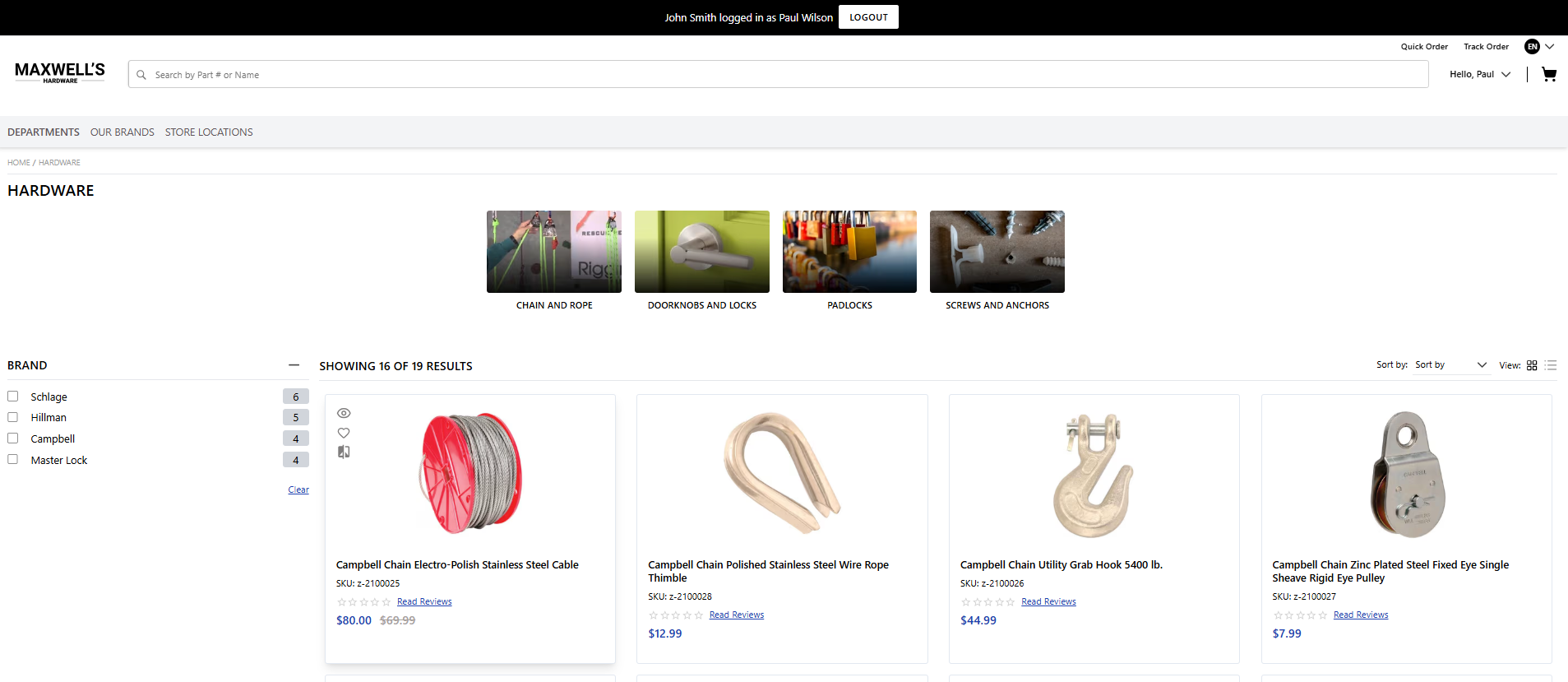
Step 4: Add Products to the Cart
- Select the required product.
- Enter the required quantity.
- Click Add to Cart.
- Repeat this process for each additional product that should be included in the order.
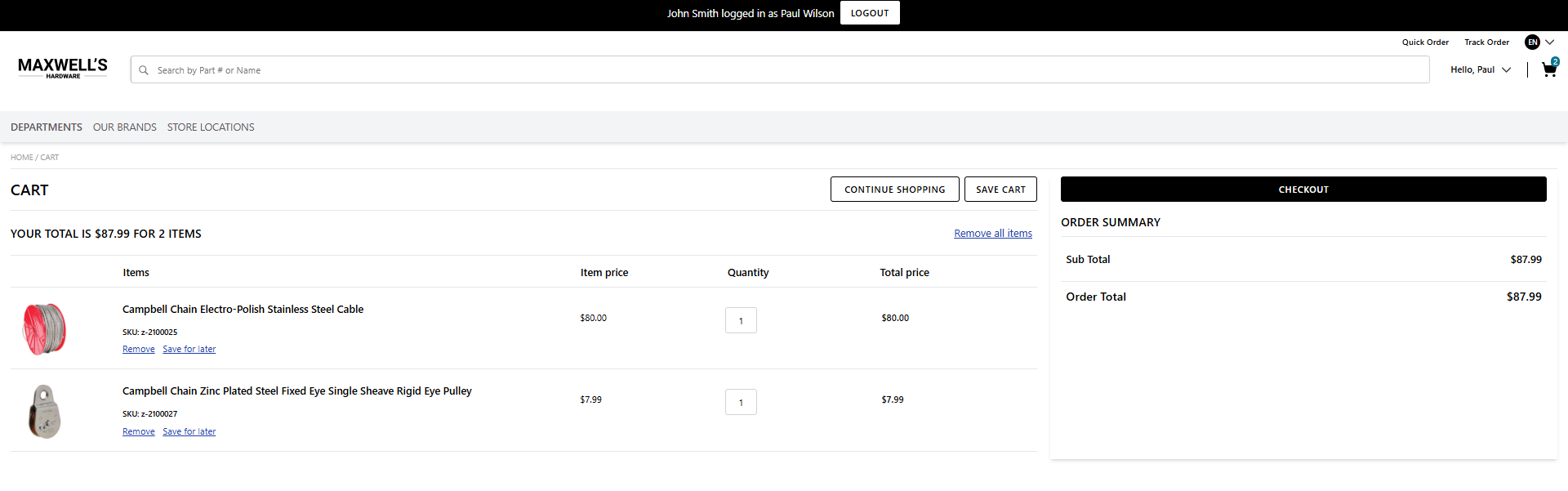
Step 5: Open the Cart and Move to Checkout
- Open the customer's cart from the Storefront.
- Click Proceed to Checkout.
- Confirm that the process redirects to the Cart page before checkout is completed.
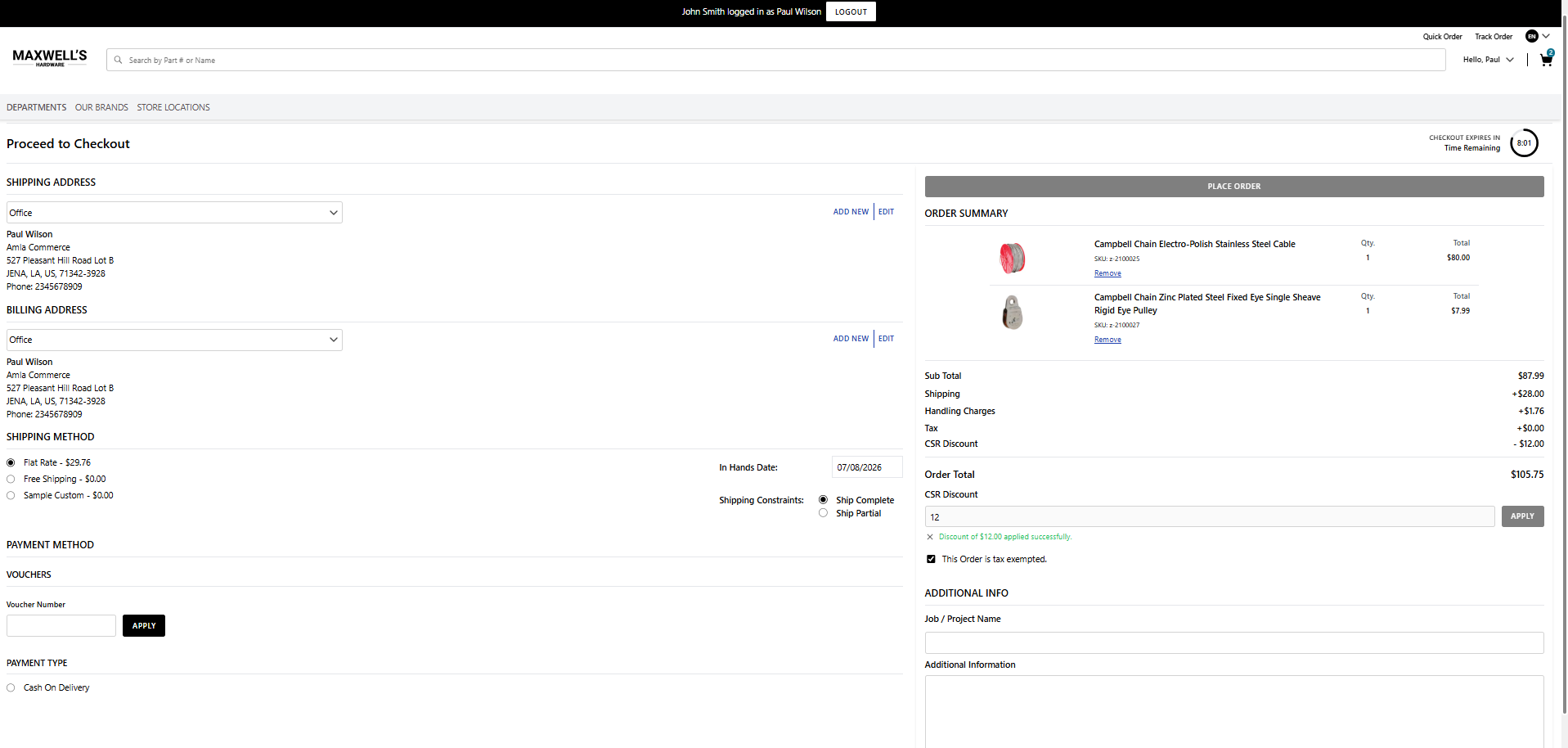
Step 6: Review or Update Addresses
- In checkout, review the available billing and shipping addresses.
- Use the Dropdown to Change Address to select a different stored address when available.
- Use Add New/Edit Address to create a new address or update an existing one.
- Complete the required address details and save the changes.
Step 7: Select the Shipping Method
- In checkout, review the available Shipping Methods.
- Select the appropriate shipping method for the order.
Step 8: Select the Payment Method
- In checkout, review the available Payment Methods.
- Select the payment option that applies to the customer.
Step 9: Apply Discounts and Tax Settings
Apply a CSR Discount
- In checkout, locate the Discounts & Taxes section.
- Review any existing promotions or discounts already applied to the order.
- Enter the applicable CSR Discount.
- Confirm that the order total updates correctly.
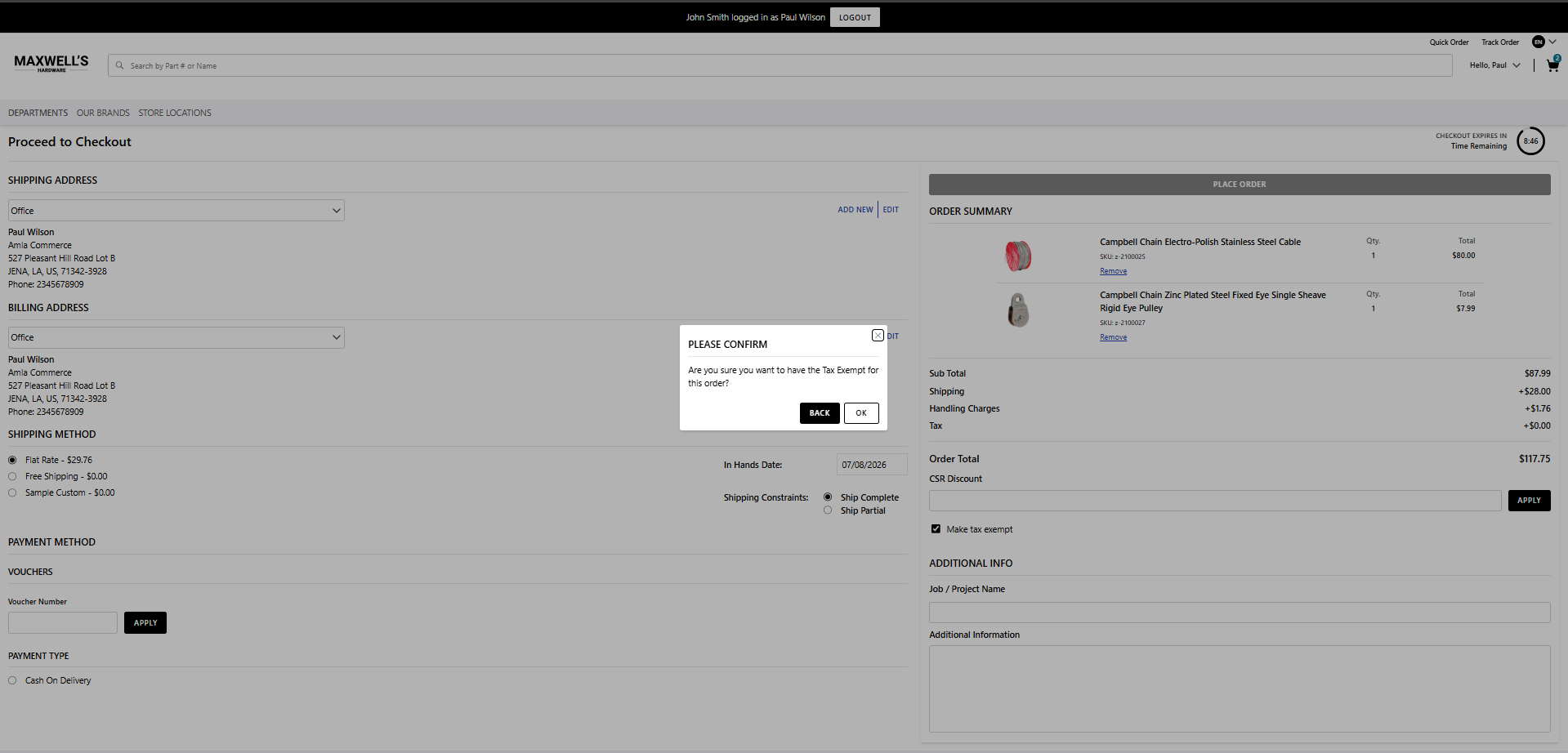
Apply Tax Exemption
- In the Discounts & Taxes section, select the Tax Exempt checkbox.
- Review the confirmation window that appears.
- Click OK to confirm the tax-exempt selection.
Step 10: Review the Order Summary
- Review the products, quantities, and pricing in the checkout summary.
- Confirm that the selected addresses, shipping method, and payment method are correct.
- Validate any applied discounts or tax-exempt changes.
- Ensure the order reflects the intended customer and account context before submission.
Step 11: Place the Order
- Click Place Order to complete the purchase.
Additional Use Case
Reorder an Existing Order for a Customer
Administrators can also create a new order by reordering items from an existing order.
Step 1: Open an Existing Order
- In the Admin Console, go to the Orders Grid, Manage Order page, or User/Account Orders.
- Locate the order that should be reordered.
Step 2: Start the Reorder Process
- Click Reorder for the selected order.
Step 3: Review the Cart
- Confirm that the selected items have been added to the customer's cart.
- Verify that the system redirects to the Storefront Cart page.
- Review product availability, pricing, and configuration validation before checkout.
Step 4: Complete Checkout
- Continue through the checkout process by following the standard order steps in this article.
A new order is created using the products from the previous order while still validating current Storefront rules and order data.
Checkout Address Behavior by Customer Role
Customer
- The Dropdown to Change Address and Add New/Edit Address options are available during checkout.
- Any address that is added or edited is saved to the customer's personal address book.
User B2B
- The Dropdown to Change Address and Add New/Edit Address options are available to the administrator during checkout.
- These address actions remain available even if the shopper's normal access level might otherwise create inconsistency in address availability.
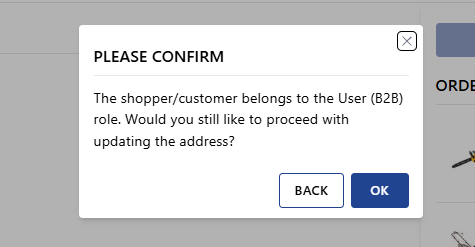
- The system displays a modal indicating that the shopper belongs to the User (B2B) role.
- Any address that is added or edited is saved to the associated account address book.
Manager B2B
- The Add New/Edit Address option is available during checkout.
- The system displays a modal indicating that the shopper belongs to the Manager (B2B) role.
- The confirmation message displayed is: The shopper/customer belongs to the "Manager (B2B)" role. Would you still like to proceed with updating the address?
- Any address that is added or edited is saved to the associated account address book.
Administrator B2B
- The Dropdown to Change Address and Add New/Edit Address options are available during checkout.
- Any address that is added or edited is saved to the address book of the associated account.
Key Benefits of Creating Orders Through Impersonation
- Orders follow the same Storefront workflow used by customers.
- Customer-specific catalogs, pricing, shipping methods, and payment methods are applied automatically.
- Promotions, discounts, and checkout-level pricing adjustments can be managed during the ordering process.
- Supports advanced Storefront capabilities such as profile-based catalog access, dynamic account switching, approval management, budget management.
- The checkout experience remains aligned with the customer journey.
Best Practices
- Confirm the correct customer record before starting impersonation.
- Review cart contents and checkout details carefully before placing the order.
- Use address options carefully when working with B2B customer roles.
- Validate discounts, tax settings, shipping methods, and payment methods before final submission.
- Use reorder when a repeat purchase needs to be placed efficiently.
Summary
Impersonation provides a clear and structured way for administrators to create orders on behalf of customers from the Admin Console. By redirecting the administrator into the Storefront as the selected customer, Znode ensures that the order is created with the correct pricing, catalog visibility, checkout behavior, address handling, and business rules.
This results in a more accurate and consistent ordering process while making it easier for administrators to support customer purchasing needs.